
Pavers,
set to stay flat for decades.
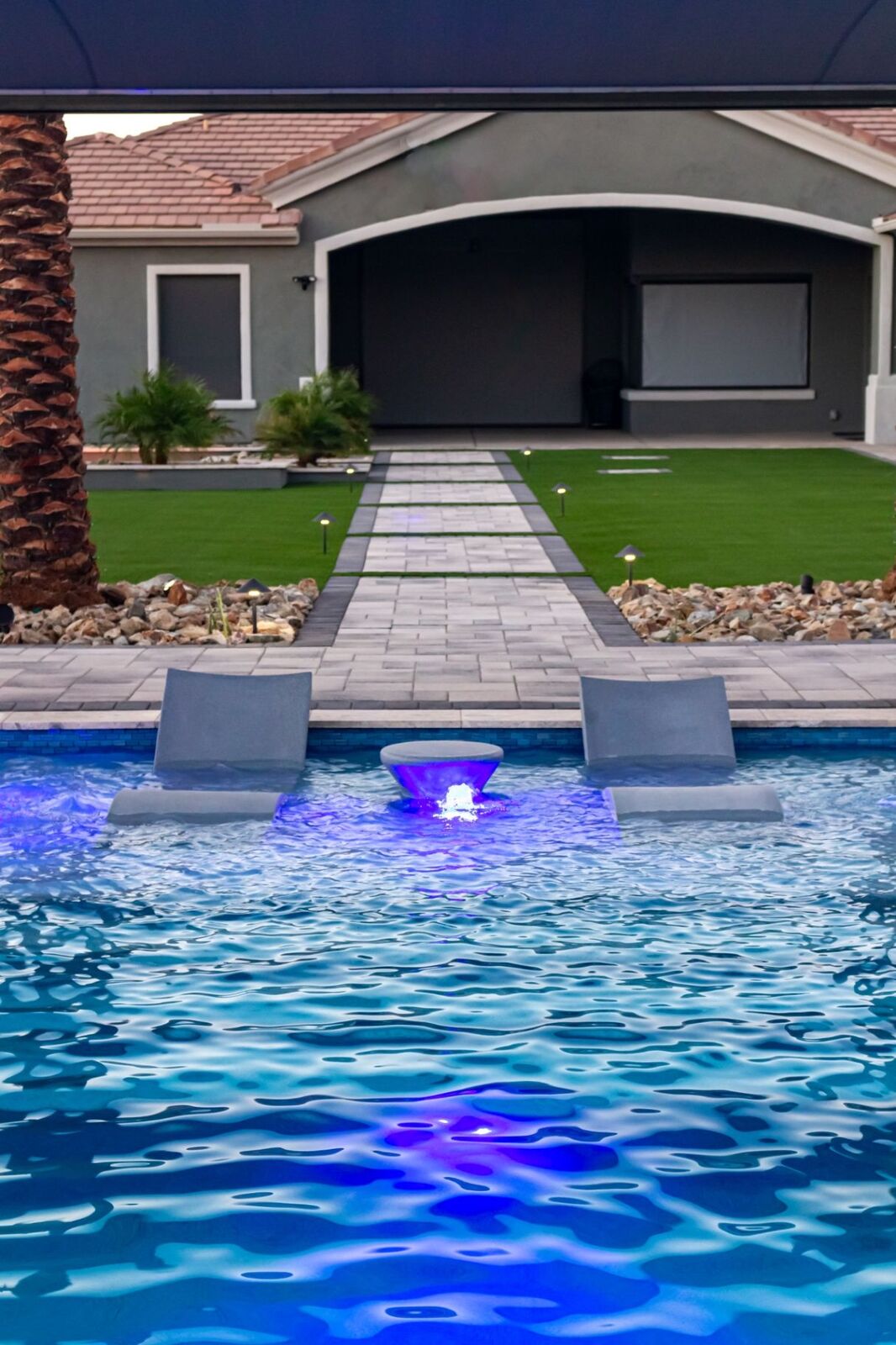
Travertine, porcelain, and concrete pavers laid on a properly engineered base with polymeric sand joints — for front-yard entries, paver driveways, motor courts, patios, pool decks and commercial drive lanes. Built to hold their line through 110° summers, monsoon downpours and Arizona's caliche soil.
Built to last.
Built right.
Most residential paver projects fall between $14 and $28 per square foot installed depending on paver tier, pattern, demo, and base depth. Travertine pool decks and large driveways sit at the higher end. We don't lay pavers over sand without a compacted aggregate base — that's the only thing separating a 30-year install from a 5-year one.
- Belgard, Pavestone, and Techo-Bloc concrete pavers — full warranty.
- Travertine pool decks — French pattern, cool to walk on, slip-rated.
- Porcelain pavers — modern format, fade-proof, perfect for contemporary builds.
- 4–6 inch compacted aggregate base · geotextile fabric · polymeric joint sand.
- Driveways engineered for vehicle loads with reinforced edge restraint.
- Lifetime manufacturer warranty on pavers · 5-year workmanship warranty.
What to expect.
After the consultation we measure, lay out the pattern, and quote a fixed price. Demo, base prep, paver install, cutting, and polymeric sand finishing typically takes 4–10 days depending on square footage. We compact in lifts, install proper edge restraint, and finish with polymeric sand that locks the joints against ants, weeds, and washouts.
Pavers & base systems we trust.
Most of the pavers we install are made for Arizona — formulated for 115° heat, caliche soil, and monsoon washouts. We don't order from national catalogs that don't understand desert conditions.
- Phoenix Pavers
Made right here in Arizona. Tested against our UV, heat expansion, and caliche soil — the only line engineered specifically for the Valley.
- Akerstone
High-density architectural pavers. Deep, rich color profiles that hold up under relentless Arizona sun without fading.
- Belgard
Premium concrete pavers — Mega-Arbel, Catalina Slate, Dublin Cobble. Strong AZ distribution and lifetime manufacturer warranty.
- Mermer Travertine
Premium Turkish travertine — French pattern, brushed-chiseled edge. Stays cool underfoot on pool decks even at 115°.
- Porcelain pavers (20mm)
Modern look, fade-proof, freeze-thaw rated. Perfect for contemporary desert builds.
- Gator polymeric sand
Joint stabilization — locks pavers against ants, weeds, and monsoon washouts.
Straight from our crew.
Honest answers, real pricing, and what to look out for — before you spend a dollar.
Pavers & Hardscape FAQ.
How much do pavers cost in Arizona?+
Most residential paver projects run $14–$28 per square foot installed. Travertine pool decks, larger driveways, and intricate patterns sit at the higher end of that range.
Pavers or stamped concrete — which is better in Phoenix?+
Pavers win in Arizona. They flex with caliche soil movement instead of cracking, individual pavers can be lifted and reset if needed, and travertine stays meaningfully cooler underfoot than concrete in summer.
Why does the base matter so much?+
Pavers laid on thin sand fail in 5–7 years — they shift, sink, and let weeds through joints. A properly compacted 4–6 inch aggregate base with geotextile fabric and polymeric joint sand is what makes them last 25–30+ years.
Can you tie pavers into an existing pool deck or patio?+
Yes — we match elevation, joint pattern, and color tone so the new work reads as one continuous space rather than an obvious addition.
Let's give you hardscape that still looks brand-new in 20 years.
Free consultation, custom 3D design preview, fixed-price quote — usually within 24 hours.